

- Home
- News & Updates
- DRAGEN v4.6: A decade of genomic software innovation, now available anywhere your data lives
-
DRAGEN
-
Illumina BioInsight Platform Core
-
Product updates
-
News
- 09/29/2026
DRAGEN v4.6: A decade of genomic software innovation, now available anywhere your data lives
The new DRAGEN v4.6 release introduces DRAGEN Software (SW) mode: the DRAGEN analytical engine with a decade of compounding innovation, accuracy, comprehensiveness, and speed, now running on standard x86 compute infrastructure with bit-exact accuracy parity. No FPGA required.
See what’s new in DRAGEN v4.6. Join our upcoming technical webinar on October 28-29, 2026. Register here.
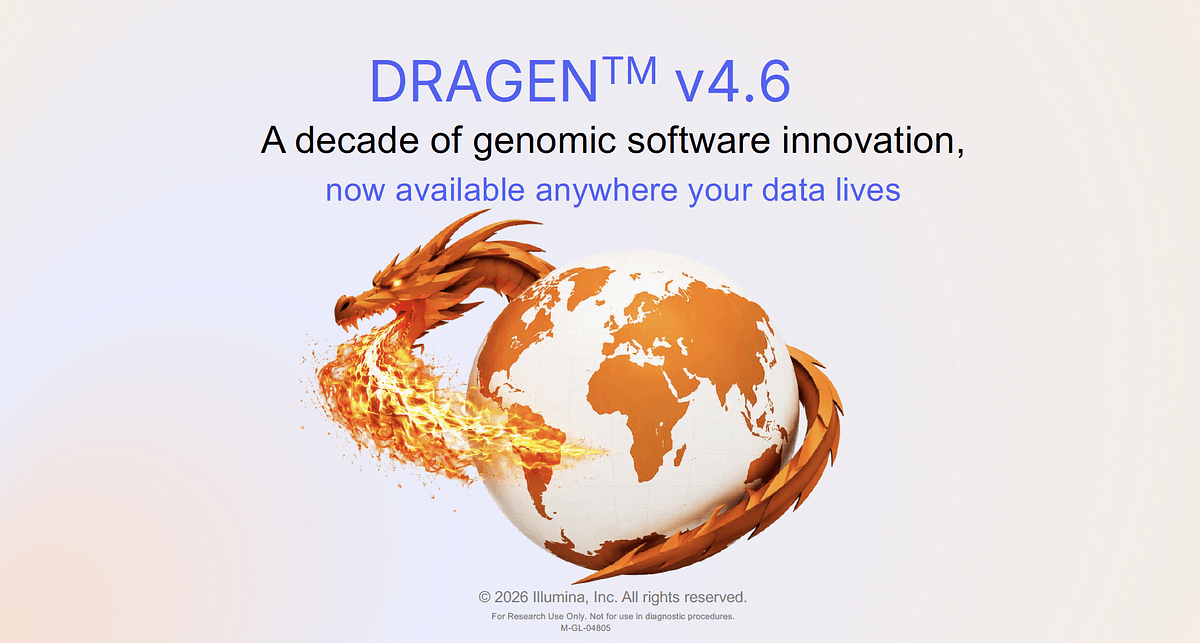
For over a decade, DRAGEN's FPGA-accelerated architecture has systematically redefined what is achievable in genomic secondary analysis. Hardware acceleration delivered speed that reduced whole-genome analysis from days to under an hour. Pangenome-aware mapping and machine learning-driven variant calling delivered accuracy that halved error rates release over release. Moreover, expanding analytical scope delivered comprehensiveness that grew from small variant calling to over 8 variant categories from 13 specialty gene callers. This encompassed structural variants, copy number events, short tandem repeats, pharmacogenomics, HLA typing, RNA fusions, methylation, biomarkers and more, supporting a broad range of genomic research applications, all from a single pipeline invocation.
Up until this point, DRAGEN’s FPGA-driven innovation established the analytical standard. The new SW mode release (available from October 8, 2026) makes DRAGEN deployable everywhere, giving researchers in any region, on any infrastructure, and under any data residency requirement access to the same analytical quality without specialized hardware.
Alongside this deployment expansion, DRAGEN v4.6 delivers new bioinformatics capabilities including UPD calling, EBV detection, HER2 focal gene amplification, and enhanced RNA workflows to continue DRAGEN's trajectory of expanding what researchers can reliably extract from sequencing data.
Let us explore how DRAGEN v4.6 achieves this and what it means for researchers across genomics.
DRAGEN SW Mode: DRAGEN analysis on Standard Compute
DRAGEN SW-Mode runs the DRAGEN capabilities on any standard x86 CPU with bit-exact concordance to FPGA-based DRAGEN.
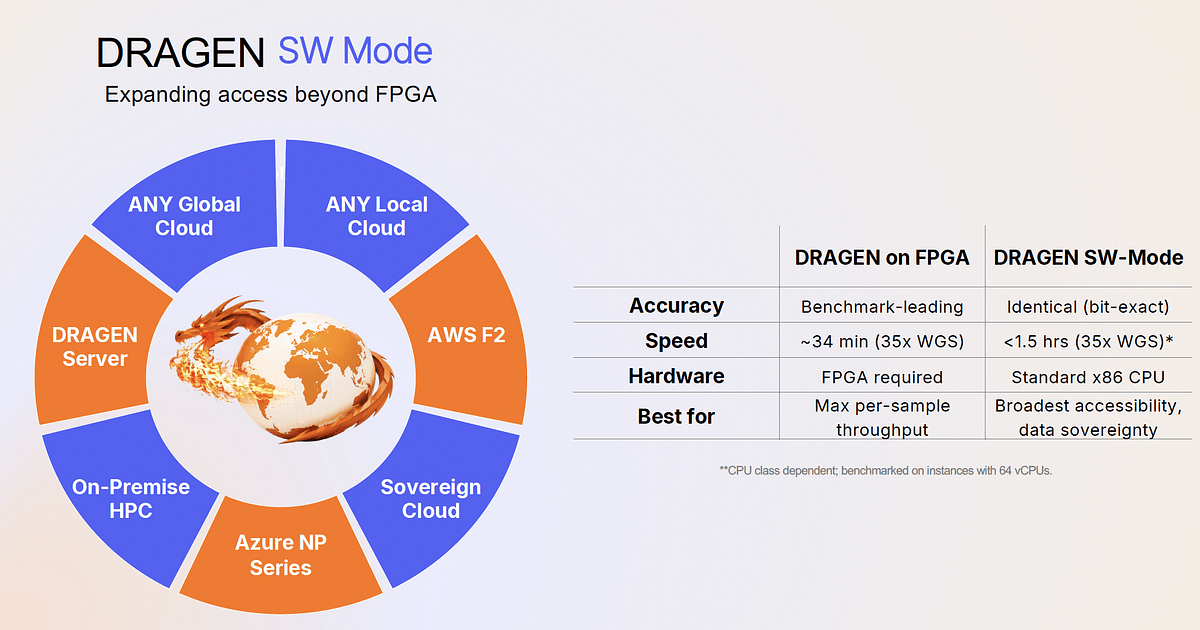
SW-Mode runs on AWS, Azure, GCP, Oracle, sovereign clouds, and on-premises HPC, enabling in-country processing for data residency compliance and elastic burst scaling on existing infrastructure.
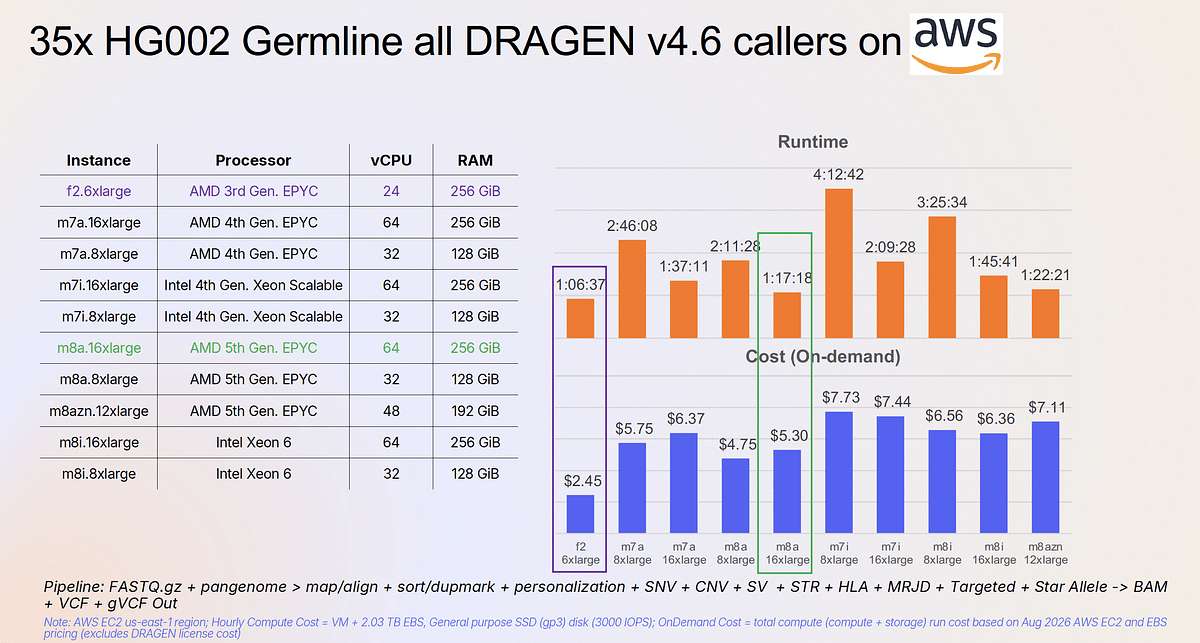
DRAGEN v4.6 SW mode is available starting October 8, 2026 through the Illumina BioInsight Platform (BioInsight Platform) with new per-sample pricing. Researchers can get started immediately with pay-as-you-go access or prepaid credits, with no capital commitment required. View pricing and get started on the BioInsight Platform.
What’s new in the science
Alongside SW mode, DRAGEN v4.6 delivers new callers and workflow improvements across germline, oncology, and RNA analysis.
TruPath Genome: Extending the Reach of Short-Read Sequencing
TruPath Genome in v4.6 pushes short-read sequencing into territory that previously required long reads or specialized assays.
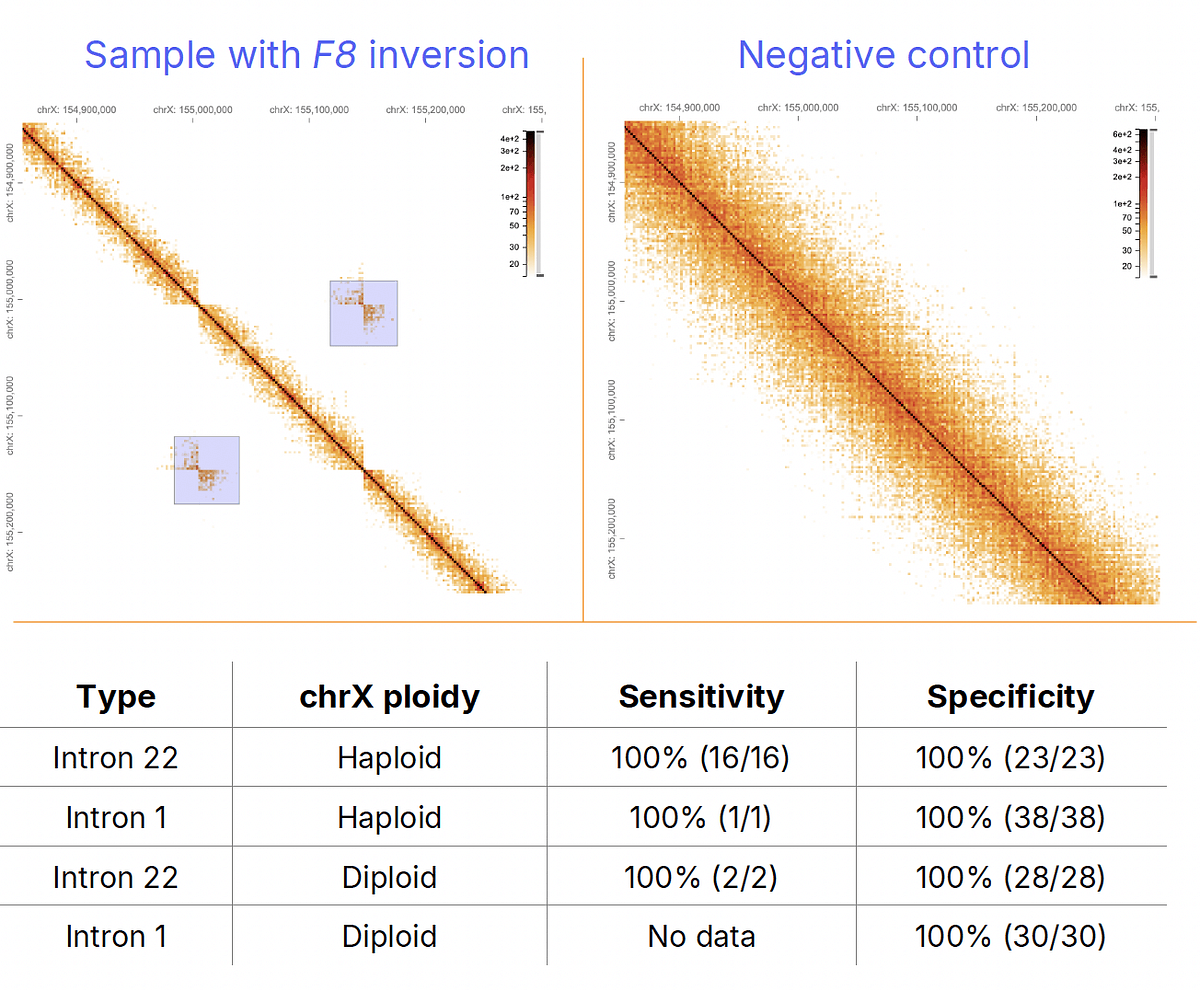
A new F8 inversion caller identifies intron 1 and intron 22 Factor VIII inversions directly from short-read WGS. These inversions are the most common cause of severe hemophilia A but reside within segmental duplications that confound conventional alignment. By leveraging TruPath long-range proximity information, DRAGEN resolves them without Southern blot or long-range PCR.
Multi-Region Joint Detection (MRJD) adds GBA to the default panel and improves haplotype reconstruction across complex genomic regions. For genes where short reads collapse signal across paralogs (e.g., GBA/GBAP1), MRJD now separates gene-specific and pseudogene-specific haplotypes with improved concordance. DRAGEN v4.6 also introduces built-in phasing visualization in BAM output, enabling researchers to inspect haplotype assignments and phase block boundaries without external tooling. Learn more about TruPath Genome.
Germline Enhancements
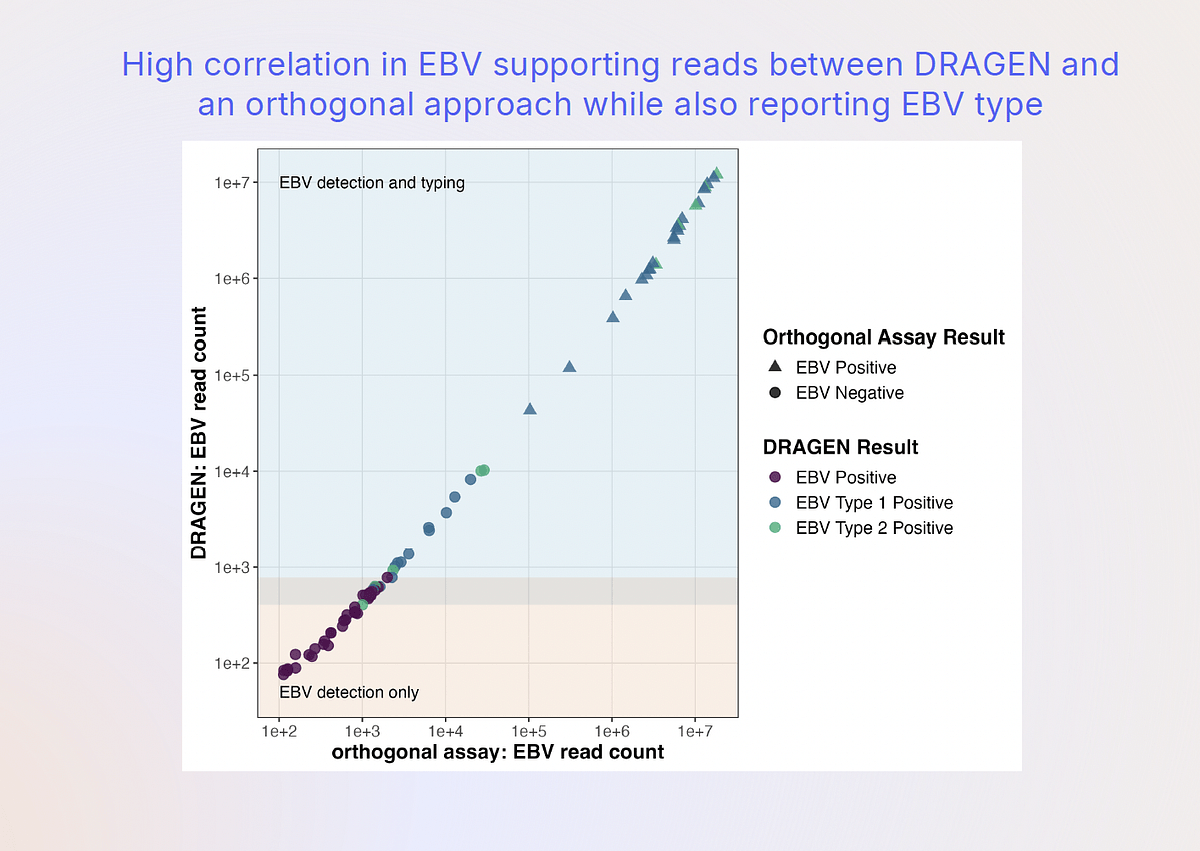
New UPD calling on WES and WGS detects whole-chromosome and segmental uniparental disomy events with het/iso classification and trio support, enabling research into imprinting disorders (Prader-Willi, Angelman, Beckwith-Wiedemann) without a separate microarray. EBV detection from WGS enables researchers to investigate Epstein-Barr Virus presence alongside genomic alterations in a single workflow. Additional improvements include a new software mapper for SBS and 5-base germline analysis, improved SV BND precision, consolidated sex/ploidy estimation, and germline ASCN updates.
Oncology Research Enhancements
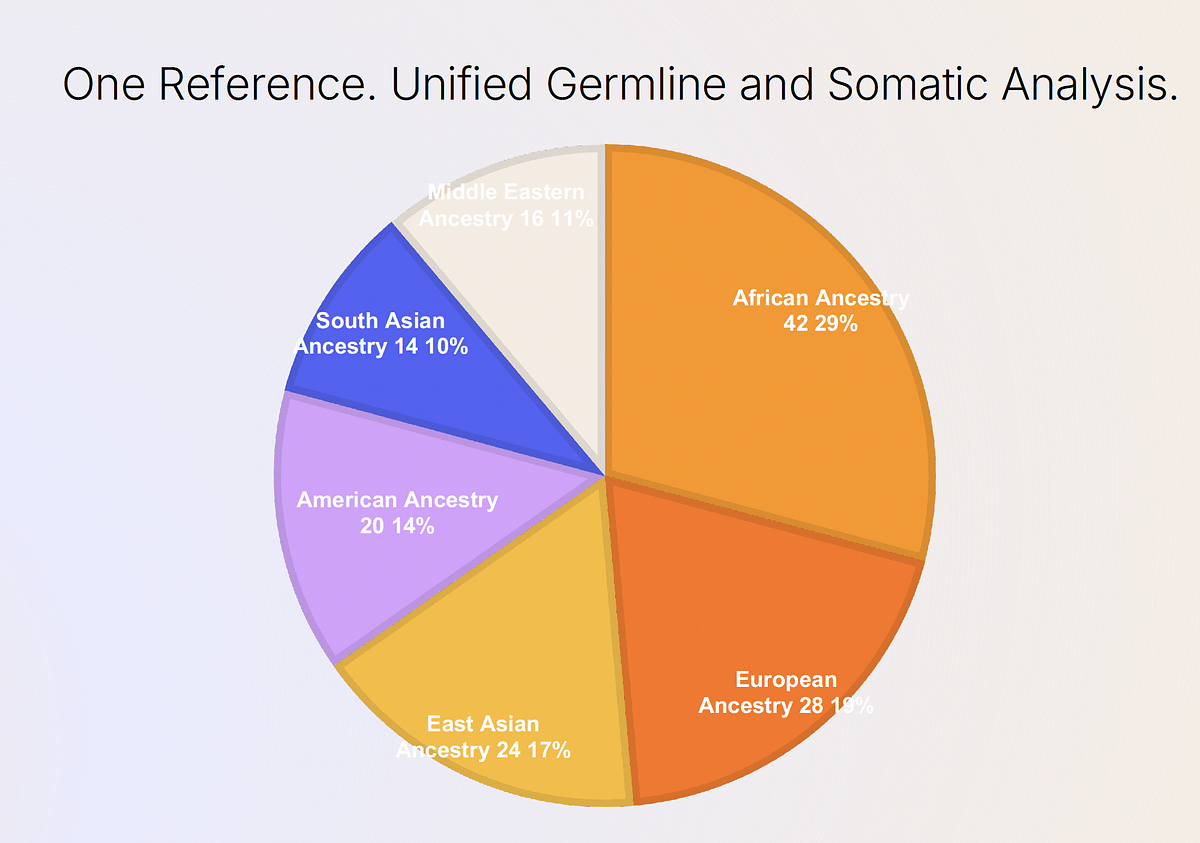
New focal amplification detection identifies events such as HER2 (ERBB2) from WGS, providing a research-relevant biomarker signal without a separate assay. Low tumor purity detection rescues samples that previously failed quality thresholds through improved purity/ploidy modeling. Pangenome-aware mapping now extends to somatic workflows for consistent reference handling across germline and somatic analysis. Additional updates include TMB/HRD/MutSig support with Somatic T/N ML, WHO arm-level events by default, and reduced FFPE false positives.
RNA Enhancements
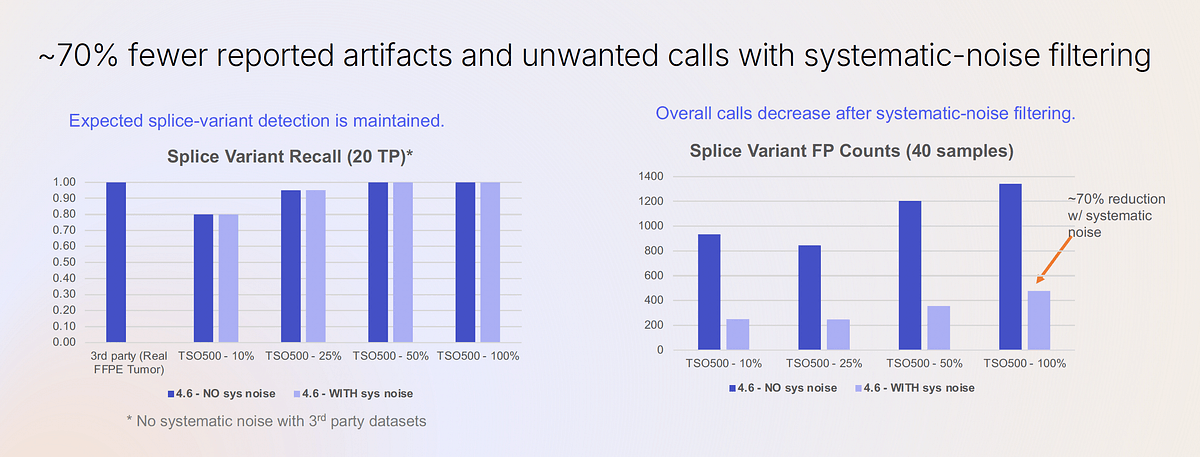
Bulk RNA gains RNA UMI support, systematic noise filtering for fusions and splice variants, PTD detection by default, and enriched fusion output (transcript ID, exon number, TPM, FFPM). Single-cell RNA adds PIPseq UMI, splice junction matrices, and standalone cell-filtering mode.
For detailed documentation on every feature, refer to the DRAGEN v4.6 User Guide.
Getting Started with DRAGEN SW mode
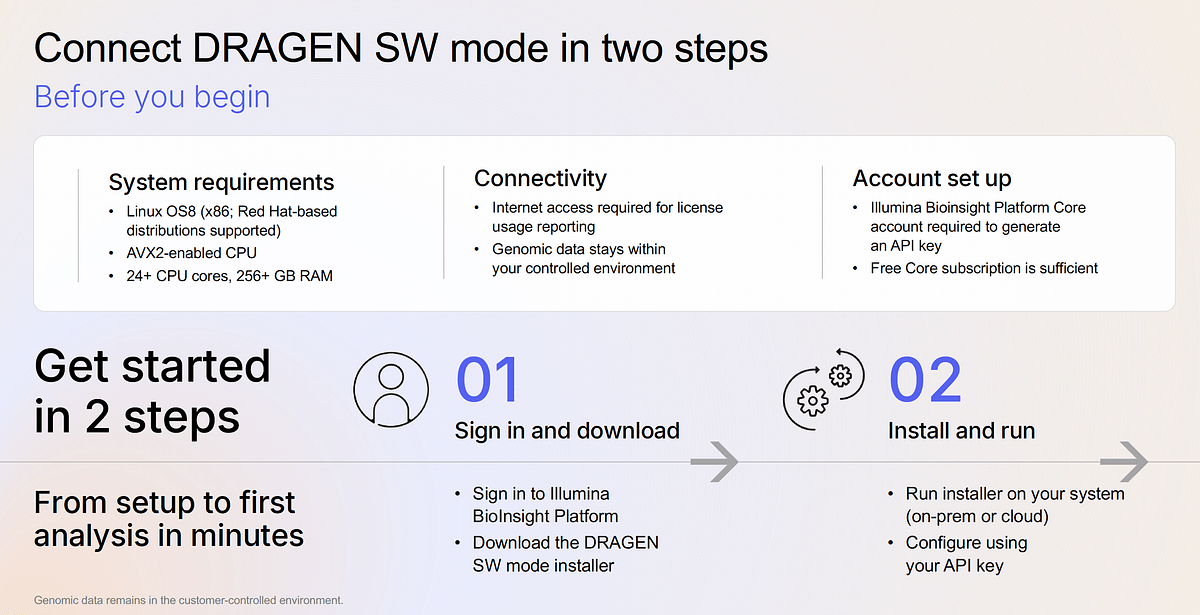
Setting up DRAGEN SW mode requires two steps:
A New Era of Accessible Genomic Analysis
A decade of innovation in accuracy, comprehensiveness, and speed is now available to any researcher, on any infrastructure, in any geography. And as DRAGEN continues to expand its analytical capabilities with each release, every new advance will be accessible from day one, wherever your data lives.
Try DRAGEN free for 30 days. Sign up on the BioInsight Platform and get full access to every tier of analysis, from Foundation through Comprehensive, at no cost. All 8 variant categories, all 13 specialty gene callers, pharmacogenomics, HLA, and biomarkers. No FPGA required. Run it on your infrastructure from October 8, 2026.
- Start your 30-day free trial
- Install DRAGEN Software Mode: Download for on-premise HPC
- For documentation and SW-Mode deployment instructions, refer to the DRAGEN v4.6 User Guide.
- Join us for a live walkthrough at our technical webinar on October 28-29, 2026. Register here.
Footnotes
* Illumina internal data on file
M-GL-04848
For Research Use Only. Not for use in diagnostic procedure