

- Home
- News & Updates
- Latest release of Illumina Connected Multiomics expands and accelerates data analysis
-
Illumina Connected Multiomics
-
Product updates
-
News
- 06/03/2026
Latest release of Illumina Connected Multiomics expands and accelerates data analysis
Illumina® Connected Multiomics v1.2 expands functionality by adding end-to-end eQTL and pQTL workflows to move from association signals to biological meaning with fewer handoffs, deeper Correlation Engine integration allowing users to directly explore its knowledgebases, and AI-generated methods summaries to make results easier to share and reproduce.
QTL discovery: a framework for eQTL and pQTL workflows
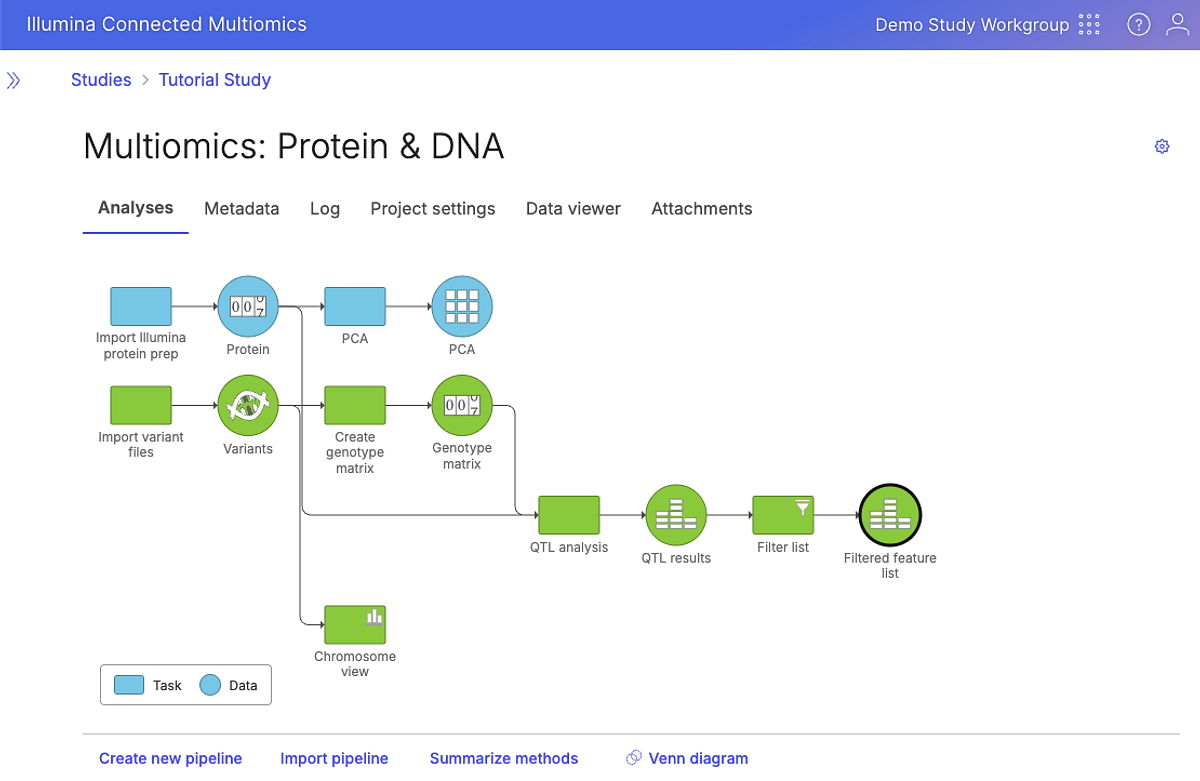
This release of Connected Multiomics introduces a QTL framework that helps connect genetic variation to molecular phenotypes in a consistent, repeatable way. This structure supports both eQTL (DNA + RNA) and pQTL (DNA + protein) discovery and is designed for rapid iteration as you adjust cohorts, covariates, and hypotheses, allowing you to determine which genetic variants drive observed RNA or protein changes, not just what has changed. This makes it possible to distinguish regulatory effects from downstream molecular changes and prioritize candidate causal genes within associated loci.
- Move from observed molecular changes to genetic drivers by rapidly combining DNA with transcriptomic or proteomic data to generate analysis‑ready inputs for eQTL and pQTL discovery.
- Interrogate regulatory effects, not just associations, by iteratively refining cohorts and covariates to distinguish true genetic signals from confounding, batch, or context‑specific effects.
- Apply a common analytical logic across eQTL and pQTL studies, making it easier to compare regulatory effects at the RNA and protein levels and tell whether genetic variation acts transcriptionally, post‑transcriptionally, or both.
Example: In a germline + bulk RNA-seq study, a team can run eQTL discovery to surface variant–expression associations and then immediately pivot to interpretation; checking whether implicated genes align with tissue- or disease-relevant biology, overlap known perturbation signatures, or show support in reference evidence.
Interpretation in context: deeper Correlation Engine integration
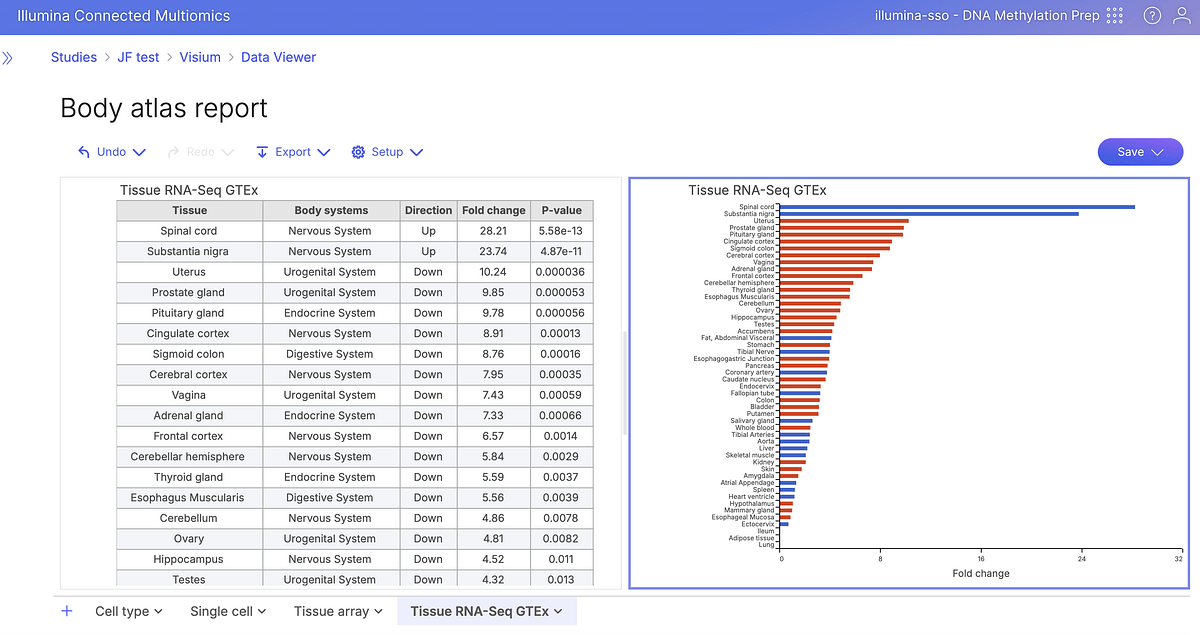
Finding statistically significant signals is only the beginning; the next challenge is explaining them with evidence. Connected Multiomics has strengthened its integration with Illumina Correlation Engine so you can bring tissue, disease, perturbation, and treatment context directly inside Connected Multiomics as you review results.
- Interactive atlas reports for faster triage, helping you quickly assess candidate relevance across biological contexts.
- Direct access to Correlation Engine atlases within the workflow, including Body, Disease, Knockdown, and Pharmaco atlases.
- Expanded gene annotation reporting that surfaces relevant evidence (including from sources such as PubMed and ClinicalTrials.gov) to help connect new signals to existing knowledge.
With evidence embedded alongside results, teams can prioritize candidates supported by consistent atlas signals, known perturbation effects, or emerging clinical research relevance, without repeatedly switching tools to assemble context.
AI methods summaries: Clearer sharing and reproducibility
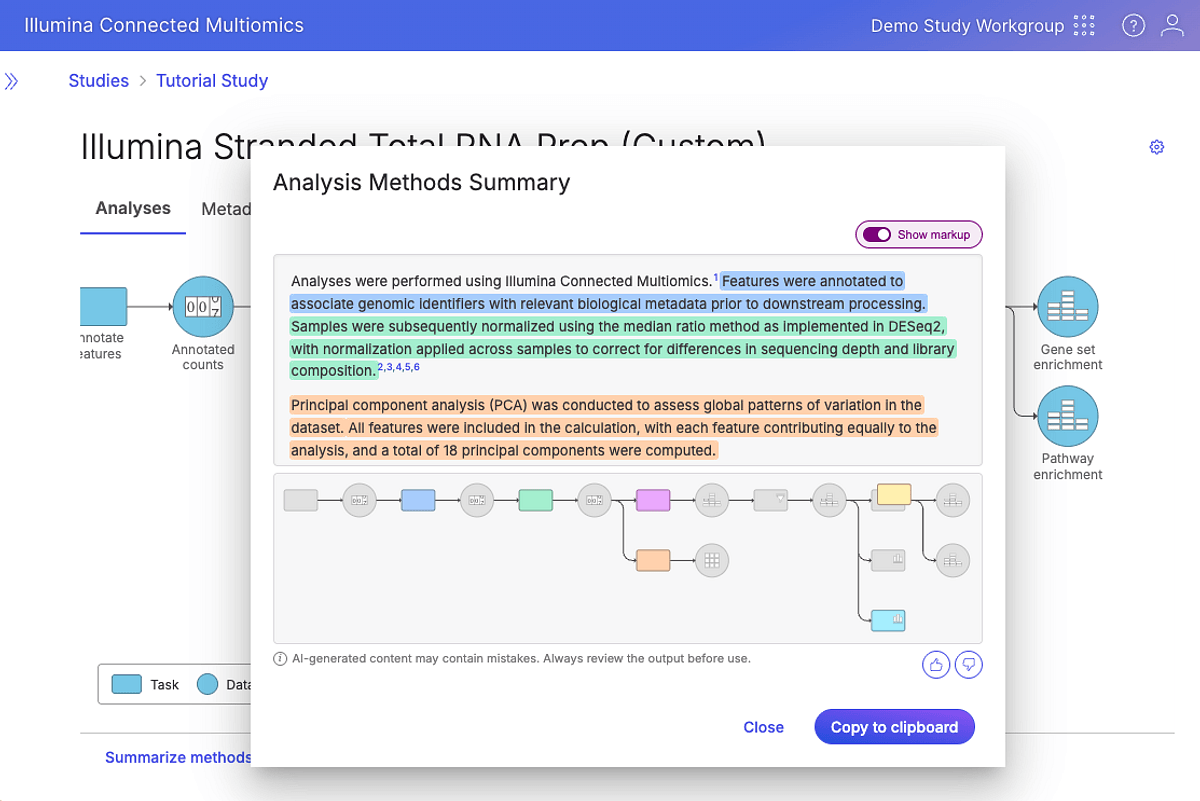
Connected Multiomics AI capabilities are designed to reduce friction during exploration and make downstream communication easier. The last release brought AI-powered Analysis Suggestions to recommend next analysis steps based on common research workflows. This release delivers AI-generated Methods Summaries to produce a clear record of inputs and key steps taken, so results are easier to review, hand off, and reproduce. Color-coded task associations make it easy to see which steps contributed to each part of the summary, helping users trace results back to the underlying analysis.
This is especially helpful for cross-team collaboration, internal handoffs, core facilities, and CRO or service-provider workflows, where consistent documentation can be the difference between fast progress and time-consuming back-and-forth.
What this release enables
This release of Connected Multiomics is designed to shorten the path from QTL discovery to interpretation. Run eQTL and pQTL analyses, apply Correlation Engine context to prioritize and explain signals, and share a reusable methods record with AI-generated summaries. Less overhead, more biology.
Explore Connected Multiomics
Request a free trial | Watch demos | Visit the product page
---
For Research Use Only. Not for use in diagnostic procedures.
M-GL-04460